Payment Gateway Testing: Complete Guide, Test Cases & Checklist 2026 – Content gap
October 11, 2026



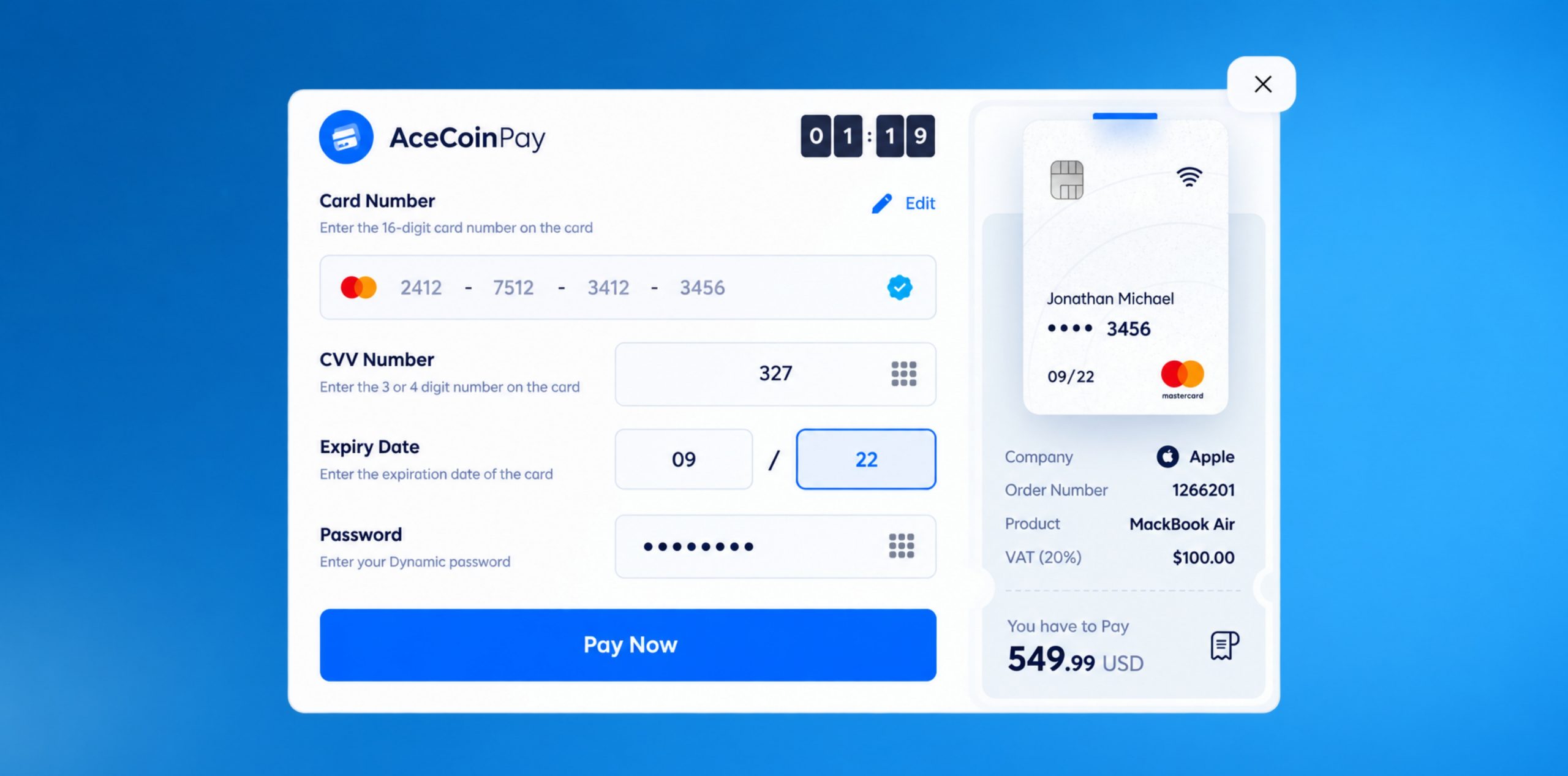
A payment gateway is the point where a customer’s checkout becomes a financial transaction. That makes even a small technical problem way more important than you think. A payment can be declined, processed twice, get stuck in a pending state, or even marked as successful when the merchant never actually received confirmation.
Payment preferences are changing, and digital wallets are becoming a major part of how people pay.
According to the Global Payments Report 2026, digital wallets are accounted for:
The report draws on payment data from 42 markets and a survey of 63000 consumers.
For businesses, this shift means payment systems must support a wider range of payment options while keeping transactions secure, reliable, and convenient. A payment gateway needs to handle:
Each payment method introduces different dependencies, potential failure points, and security considerations. A problem with any part of the payment flow can lead to:
That’s why payment gateway testing matters. It helps businesses to identify the weaknesses before they affect customers. Moreover, a structured software testing approach can help teams assess these risks before new payment features go live. So a payment gateway is not simply:
Enter a card → click Pay → check whether payment succeeds.
The real challenge starts when something goes wrong, and many scenarios exist, such as:
These are the scenarios that good QA needs to catch before real customers do.
If I were in your place and needed to understand payment gateway testing in simple terms, then:
“Payment gateway testing is the process of checking whether the payment system can process transactions correctly, securely, and reliably across successful, failed, and unusual scenarios. It covers payments, refunds, API, webhooks, authentication, and security, such as duplicate requests and gateway timeouts.”
Effective testing usually combines the following:
Teams generally begin in a sandbox environment before moving to controlled production validation.
A typical flow might look like this:
Customer → Checkout → Merchant Application → Payment Gateway → Processor/Bank → Webhook → Merchant Application → Order System
There may also be fraud detection, authentication, digital wallets, accounting systems, inventory platforms, and other services involved.
That means a payment can fail at several points.
| What can go wrong | Possible impact |
| Payment is declined incorrectly | Lost sale |
| Customer is charged twice | Refund and support issue |
| Payment succeeds but order stays unpaid | Fulfillment problem |
| Webhook is missed | Incorrect transaction status |
| Webhook arrives twice | Duplicate business action |
| Refund fails | Customer dissatisfaction |
| Amount is manipulated | Financial loss |
| API is exposed | Security risk |
| Gateway slows down | Checkout abandonment |
The goal of testing is not simply to prove that payments work.
The takeaway is simple. One successful card transaction does not prove that the payment system has worked correctly.
Different testing methods cover different parts of the payment journey
| Testing Type | What It Covers | Example |
| Functional Testing | Payment workflows and business rules | Authorization, capture, refunds |
| Integration Testing | Gateway and third-party integrations | Gateway-to-merchant communication |
| API Testing | Requests, responses, errors, authentication | Payment API and webhook validation |
| Security Testing | Payment data and vulnerabilities | Authorization and transaction manipulation |
| Performance Testing | Load, response time, scalability | Concurrent transactions |
| Regression Testing | Existing functionality after changes | New gateway version |
| Automation Testing | Repeatable payment scenarios | Automated API and regression tests |
| Compatibility Testing | Devices, browsers, and payment methods | Mobile wallet checkout |
A straightforward question is asked by functional testing:
Does the payment workflow actually behave as per expectations?
Testers can validate:
For example
Payment successful → order still pending → inventory not updated
The gateway did this job
That’s why functional testing should follow the transaction beyond the payment screen.
Payment gateways rarely work alone. They may connect with:
Payment gateway integration testing checks whether these systems communicate correctly.
For example, when a payment succeeds, the application should receive the right information and update the order accordingly.
A simple test flow:
Payment submitted
↓
Gateway processes transaction
↓
Payment status received
↓
Order updated
↓
Confirmation test
If any of these steps fail, the customer experience can break, even though the payment gateway itself is working.
The payment page is not the only visible part of the system.
Behind it, API handle payment requests, responses, authentication, webhooks, and transaction updates.
Payment gateway API testing must cover valid requests:
Security matters here too. OWASP’s API security top 10 highlights risks including broken object-level authorization, broken authentication, unrestricted resource consumption, and unsafe consumption of APIs.
So don’t test only the question: Does the API work? Also ask what happens when someone sends a request they should not be allowed to send.
Payment systems handle financial and customer information, which makes security testing essential. It covers:
PCI DSS should also be considered where payment card data is stored, processed, or transmitted. PCI DSS v4.0.1 became the active version in 2024, while future-based requirements became effective on 31st March 2025.
Suppose an order costs $500. What happens if someone charges the payment request to $5? The backend should reject the manipulated amount. That’s why payment security testing should not focus only on authentication screens, transaction values, and API authorization rules; backend validation matters too.
A payment system may work perfectly during normal traffic and still struggle when the demand suddenly increases. Think about
Performance testing checks how the payment environment behaves under pressure
| Testing Type | Purpose |
| Load Testing | Test expected transaction volumes |
| Stress Testing | Find the point where the system begins to fail |
| Spike Testing | Simulate sudden traffic increases |
| Scalability Testing | Check behavior as traffic grows |
| Recovery Testing | Check how the system recovers after failure |
One important point: don’t assume that a payment gateway sandbox is designed for load testing.
Stripe, for example, documents rate limits for its testing environments and states that they are not intended for load testing.
Payment systems can change all the time. You might add
The change may look small, but its impact won’t be that small. Payment gateway regression testing checks that the existing payment journey continues to work even after the changes are made.
For example, a new wallet is added to checkout. Regression testing should not stop at the new wallet. Existing card payments, refunds, webhooks, updates related to orders, and authentication workflows should also be checked.
Payment things include many repetitive scenarios. This makes automation useful for:
The idea is simple:
Automate the tests you need to run repeatedly.
This frees testers to spend more time on exploratory testing, unusual scenarios, usability, and cases that need human judgment. Kualitatem’s Automation Testing Services cover areas including functional, API regression, and performance, as well as security testing.
Customers can access the payment page from different environments. The test covers:
This matters as digital wallets have become increasingly common. So compatibility testing should cover more than whether a traditional card form loads correctly.
Now let’s get into the practical side. A strong set of payment gateway test cases should cover
The first step is confirming that a customer can complete the payment without errors. This test helps in assessing that whether the gateway processes valid payment details and returns the expected result.
The amount sent to the gateway must match the amount calculated by the merchant application. Testing this would help in identifying the calculation errors that lead to incorrect charges.
When multiple currencies are supported by the business then the selected currency must remain consistent throughout the payment process. The test helps in verifying that gateway and merchant application record the same currency.
Authorization confirms whether the payment can be approved for the requested amount. This test checks that the gateway handles the authorization process correctly, including any required customer authentication.
Once authorized, the payment may need to be captured before funds are collected. This test verifies that the capture request is successful and that the application updates the transaction and order properly.
Correct order status:
Payment = Successful
Order = Paid
These states should match.
Once the payment is successful, the app should change the order to the real state of the transaction. By looking at both records, you can find inconsistencies that may impact the order fulfillment or the communication with the customer.
Webhooks notify the merchant application about payment events, such as successful transactions or refunds. Testing them helps ensure that the application receives the right event, updates the correct transaction, and handles repeated notifications safely.
Failed payments deserve as much attention as successful ones.
| Scenario | What to verify |
| Invalid card | Payment gets rejected |
| Expired card | Payment doesn’t complete |
| Incorrect CVV | Correct error response |
| Insufficient funds | Order remains unpaid |
| Declined payment | Correct gateway and application status |
| Gateway error | No false success |
| Processor error | Correct failure handling |
| Network failure | Safe recovery and retry |
You don’t need to verify the error message. Instead, verify these four things.
Note that they all should tell the same story
Payment testing does not end when the transaction is captured.
Customers may cancel the orders or request a refund later.
| Scenario | What to verify |
| Fully funded | The entire eligible amount is returned |
| Partial refund | The correct amount is returned |
| Multiple refunds | No over-refund |
| Failed refund | Correct failure state |
| Cancellation | Correct transaction status |
| Refund Webhook | Correct application update |
| Refund confirmation | Correct communication with customer |
This is where the payment gateway scenarios become more interesting. The normal payment flow is easy to test. The unusual situations are where systems tend to get into trouble.
Suppose a customer double-clicks to pay or refreshes the page and also retries after a timeout. If none of this happens, think: what if the same API request is submitted twice? Then what happens?
That’s where idempotency becomes important
If you want to understand it in simple terms, then let me tell you that:
“The same payment request should not accidentally create two charges.”
Consider this:
Customer pays → gateway processes payment → response times out → customer retries
The first payment might already have succeeded. If the second request is simply treated as a completely new transaction, then the customer could be charged twice.
Adyen’s documentation recommends Idempotency for POST requests and explains how it can be used when safely retrying requests after a timeout.
Timeout can be tricky because:
No response does not mean no payment.
Flow could be tested like this:
This scenario should be a part of your core payment gateway testing checklist.
What happens when the same webhook arrives twice?
It should not:
Webhook processing must be designed for handling repeated events safely.
Never assume that the data coming from your frontend is worthy of trust.
Test whether someone can change:
Original order: $500
Modified request: $5
The manipulated transaction should be rejected at the backend.
A customer should not be able to open a success URL and make an unpaid order appear paid.
Test:
The success page should reflect a verified transaction state. It should not create a transaction state.
Payment events may not always arrive in the sequence you expect.
For example:
Authorization → Capture → Refund
Instead, it could reach the connected systems differently.
Test what happens when the system arrives out of order
The application should use transaction state and event information correctly instead of simply assuming that the latest event received is always a final state.
I usually use this payment gateway testing checklist before releasing any payment-related change.
| Area | Key Checks |
| Functional | Success, failure, decline, authorization, capture, refund, cancellation |
| API | Authentication, authorization, errors, timeout, webhook, idempotency |
| Security | Sensitive data, access control, manipulation, 3DS, API security |
| Performance | Load, stress, spike, response time, throughput, recovery |
| Compatibility | Browsers, mobile, operating systems, payment methods |
| Regression | Existing flows, gateway updates, new payment methods, refunds |
No single test could cover the entire payment journey. Different types of risks exist for different testing types. You can go through the below-mentioned table. It’s basically a how-to guide for businesses. Payment testing has become more complicated because the checkout itself has become more complicated. A customer may pay with a card, digital wallet, or bank account. The transaction may then pass through several services before the merchant knows whether it succeeded. WorldPay’s 2026 research shows just how important payment method coverage has become.
| Fact | Figure | Why it matters |
| Digital wallets’ share of global e-commerce value, 2025 | 56% | Test more than traditional card flows |
| Digital wallets’ share of global in-store value, 2025 | 33% | Wallet testing matters beyond E-commerce. |
| Markets covered by Worldpay GPR 2026 | 42 | Payment behavior differs across markets. |
| Consumers in Worldpay research | 63,000+ | Payment preferences are diverse. |
| Incidents analyzed in Verizon 2025 DBIR | 22,000+ | Security testing needs broad coverage |
| Confirmed breaches analyzed | 12,000+ | Payment environments remain security-sensitive. |
The takeaway is straightforward:
More payment methods + more APIs + more integrations = more scenarios to test.
The global e-commerce transaction value for digital wallets was 56% of the total value in 2025. This would mean that the testing strategy would miss some critical payment journeys – a card-only approach.
The testing should include:
Why it matters: When a payment is authorized, the customer could experience a checkout failure. Evaluating the entire transaction flow can help discover these inconsistencies and prevent them from impacting the customer.
BNPL adds extra steps to a typical single payment. These can range from eligibility to installment approval, scheduled payments, cancellation, and refunds.
Add these scenarios to your payment gateway testing checklist:
Importance: Deferred payment errors can result in misbalances, confusing customer notifications, and reconciliation issues.
Worldpay’s report covers payments across 42 markets and over 63,000 consumers, showcasing the diversity of payment preferences.
For international businesses, test for:
If there is a failure in the region, the unsupported method or declined transaction should return a clear error message.
The reason: A checkout flow that is successful in one market can fail to be successful in another. Testing at your actual customer locations helps to minimise unnecessary payment failures.
Customer data security and preventing unauthorized transactions also play a crucial role in payment reliability.
Verizon’s 2025 Data Breach Investigations Report examined over 22,000 security incidents and over 12,000 confirmed breaches in a wide variety of environments.
These are not specific to payment gateways but still highlight the importance of security as part of the larger testing approach.
Focus on:
If payment is processed correctly, but sensitive information is exposed, or transactions can be manipulated, then it is not a successful checkout.
The success or failure of a payment is not enough to provide a good payment experience. Your payment gateway test plan should include various payment types, full payment processes, regional payment requirements, and security concerns.
Payment testing can quickly become complicated.
You may have several payment methods, multiple APIs, third-party integrations, and different transaction states to be validated. But Kualitatem can bring ease for you by testing these workflows across the payment lifecycle.
Kualitatem validates the core payment flow by providing the best functional testing services. This includes payment initiation, authorization, capture, refunds, cancellations, payment status, and failure handling.
Payment APIs must respond correctly at each step. Kualitatem efficiently tests requests and responses, authentication, error handling, webhooks, and idempotency by providing top-notch API testing services.
Payment gateways work alone on an occasional basis. Kualitatem tests connections between gateways, merchant applications, banks, payment processors, and third-party systems to ensure that data moves correctly between them.
Payment systems handle sensitive information. Kualitatem will help you by checking authentication, authorization, API security, Transaction manipulation, and potential data exposure.
A payment system must remain stable when transaction volume is increased. Kualitatem would evaluate response times, transaction throughput, concurrent users, scalability, and performance during peak loads through performance testing.
Kualitatem can automate repetitive payment scenarios and regression checks/ This helps teams run the tests consistently across releases. Its Automation testing services can support repeatable payment QA workflows.
Payment changes can affect your existing workflows. Kualitatem performs regression testing after gateway updates, application changes, and new payment methods or integration changes.
The goal would be simple: Keep the payments accurate, secure, reliable, and recoverable even if something goes wrong, and Kualitatem is best at it.
Talk to Kualitatem’s QA experts about your payment gateway testing requirements.
Effective payment gateway testing goes beyond the successful transactions; It validates the entire payment journey from authorization to refunds.
A strong testing strategy covers Functional, API, Integration, Security, Performance, and regression testing to catch issues before they affect the customers.
By testing real-world scenarios like duplicate payments, gateway timeouts, and webhook failures, businesses can reduce financial risks and protect customer’s trust.
With Kualitatem’s QA services. you can build more secure, reliable, and resilient payment experience.
Payment gateway testing works to ensure that transactions are correctly processed by online payment systems. In easier terms, it checks the transaction between customers, merchants, and banks before it goes live.
Payment failure would not only affect the customer experience but also revenue, trust, and refunds. Payment gateway testing would identify functional, integration, security, and reliability issues before they reach production.
Common payment gateway test cases include successful payments, declined transactions, expired cards, refunds, cancellations, and payment status validation.
.
First of all, you should start with valid requests.
Then test the following:
You can use the gateway’s official sandbox and test credentials, as well as test payment data. Sandbox environments have different limits from production. So, always follow the payment provider’s guidance when testing performance or loads because of sandbox environments.
Yes, API tests, regression scenarios, payment status checks, and repetitive transaction flows are good candidates for automation. But manual and exploratory testing should be complemented by automation testing rather than replacing it completely.

Not sure where your QA stands?
Speak to an Expert 

Our experts are all ready. Explain your business needs, and we’ll provide you with the best solutions. With them, you’ll have a success story of your own.
Contact us now and let us know how we can assist.