Penetration Testing Methodology: Frameworks, Phases & Best Practices
October 2, 2026




Users today have no patience for slow or buggy apps. A Dimensional Research survey found that around 61% of customers expect a mobile app to start in under 4 seconds. Almost 49% expect a response in 2 seconds or less.
Miss those benchmarks and users leave. Around 80% of customers give an app 3 or fewer chances after a performance or usability issue. For serious issues like crashing or freezing, 53% simply uninstall the app. Another 36% will remove an app if it drains their battery.
Users also tend to blame the app or the company, regardless of the actual cause. That puts businesses at real risk of losing loyal customers over issues they may not even own.
This is why mobile application testing companies need to define metrics from the customer’s point of view, not just from a technical standpoint.
Mobile phones have evolved far beyond basic communication tools. Today, smartphones predict user needs and power entire digital experiences. Even the most experienced development and QA teams can miss performance or responsiveness issues.
Delivering a successful app goes beyond clean code and on-time delivery. User experience is just as critical. A mobile application testing company ensures the app is fast, reliable, and seamless to use.
Testing teams need to address the following in the era of IoT and connected devices:
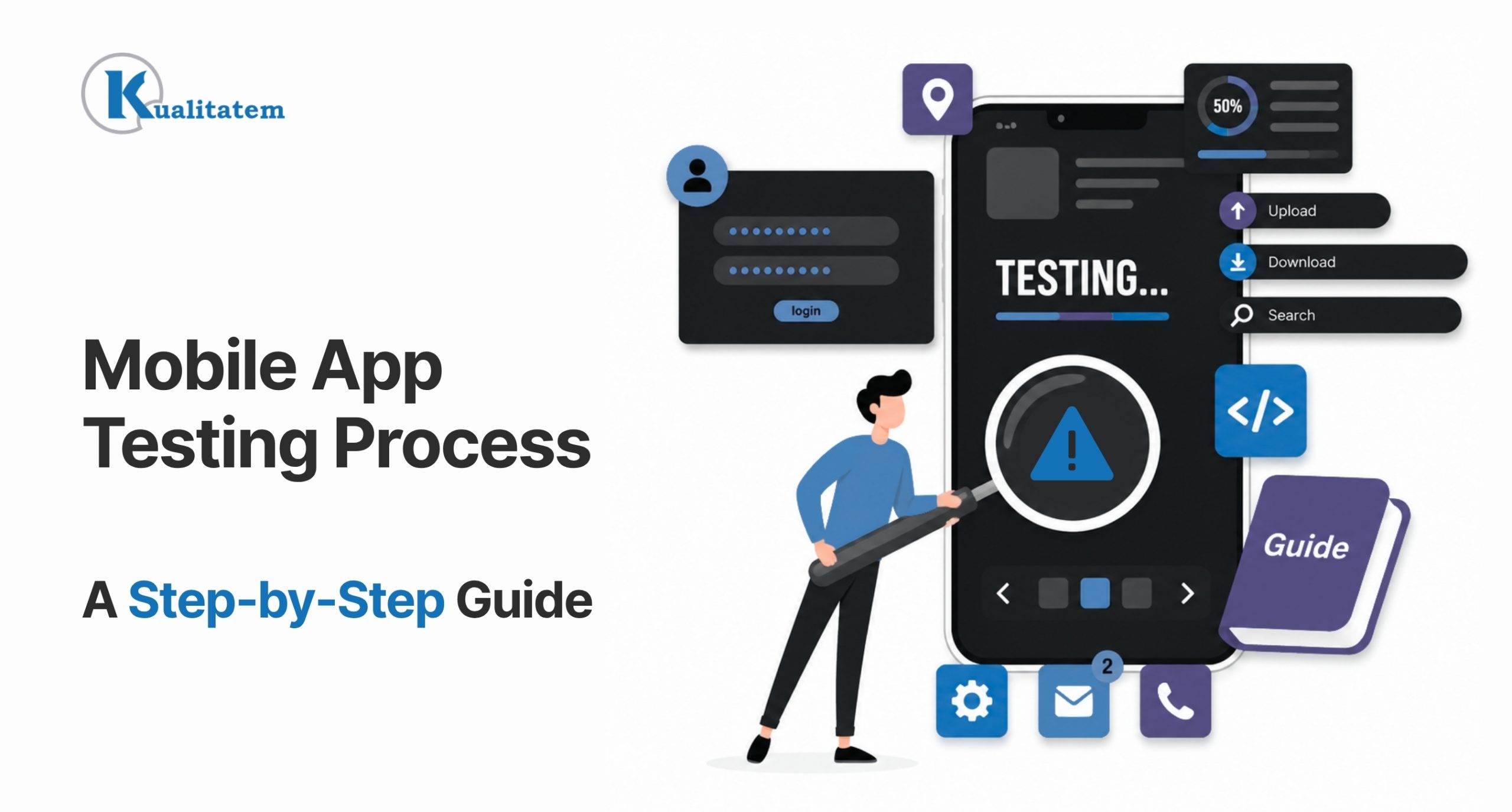
A strong testing strategy starts with a test plan built on a clear understanding of requirements and features. There are four core testing areas:
This phase checks that the app meets its basic functionality requirements. Testers look for issues in signup or login flows, app launch, and installation.
This stage tests for outlier scenarios that appear under extreme operating conditions. It identifies vulnerabilities and isolates risks before release.
This area focuses on how intuitive and easy the app is to use. Testers analyze reported bugs to improve the overall customer experience.
The testing team checks how the app performs under varying loads and environmental conditions. The goal is to make sure the app does not malfunction after it goes live.

Nabeesha is a Digital Content Executive at Kualitatem Inc. With a background in communication and extensive knowledge of QA and cybersecurity, she brings a business-first lens to technical content. Her work helps CTOs and engineering leaders cut through the noise and make confident decisions about software quality.
Not sure where your QA stands?
Speak to an Expert


Our experts are all ready. Explain your business needs, and we’ll provide you with the best solutions. With them, you’ll have a success story of your own.
Contact us now and let us know how we can assist.