What Are the Key Software Testing Strategies and When Should You Use Them?
July 10, 2026



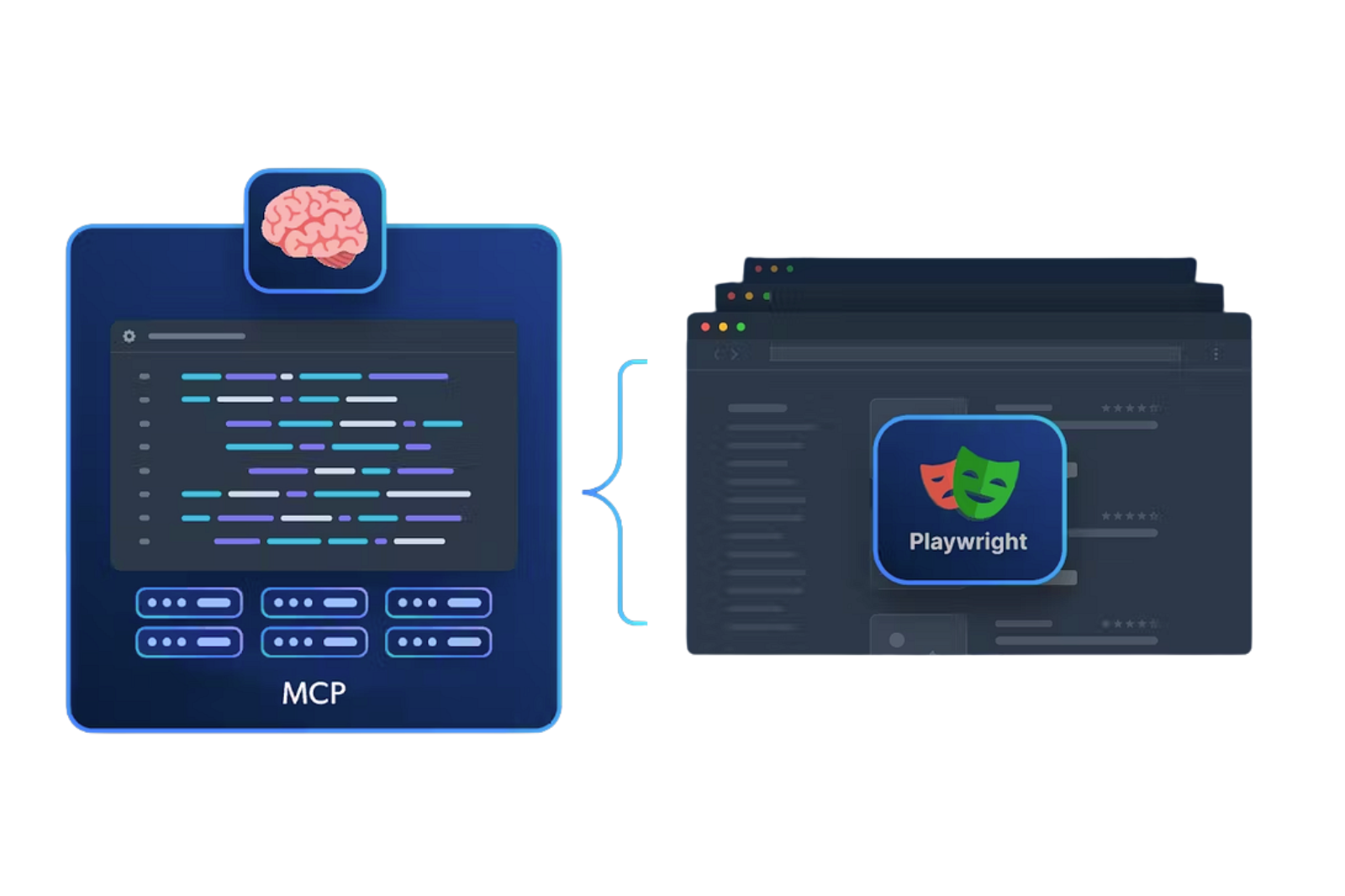
Based on Microsoft Playwright CLI GitHub Report March 2026
Summary of report
If your team is running on 500 browser automation sessions per day, you are spending roughly 57 million tokens daily on overhead that a single architectural change eliminates. Most engineering leaders have not measured this yet.
Whether they are planning to use AI coding agents such as Claude Code, GitHub Copilot, Cursor, or custom multi-agent systems for browser automation, Playwright CLI should replace or complement your current MCP setup.
The reason is simple:
Up to 4× lower token consumption per session.
At scale, this translates into tens of millions of tokens saved per day a meaningful infrastructure cost reduction, not a marginal optimization.
⚠️ Important: Microsoft Playwright Testing Cloud Retiring March 8, 2026
Teams currently using this service for parallel test execution must migrate to Azure App Testing before this date. This retirement applies only to the cloud execution platform not to Playwright CLI.
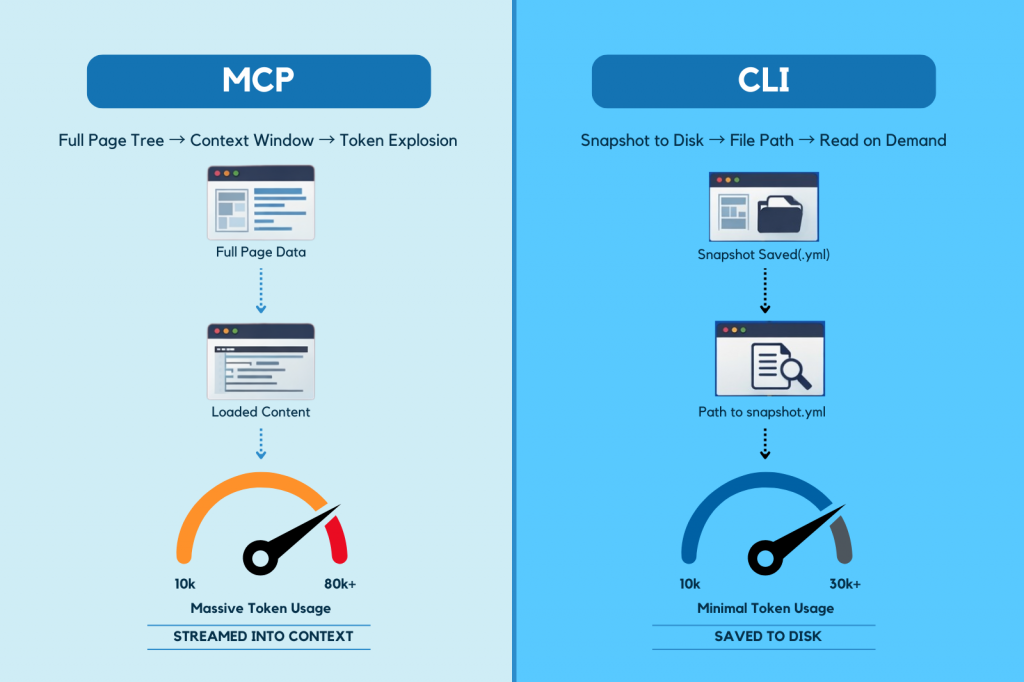
When AI agents use Playwright via MCP (Model Context Protocol), they stream the entire browser state into the model’s context window at every interaction.
That includes:
Every interaction inflates the context window.
Much of this data is stale state the agent has already left behind yet it remains in context.
This creates a compounding cost issue across:
| MCP (Model Context Protocol) + Playwright | Playwright CLI (New approach) |
| Saves browser state snapshots to disk (YAML). Returns file paths instead of full page trees. The agent reads snapshots only when needed. Context stays flat3–4× token reduction in long sessions | Saves browser state snapshots to disk (YAML). Returns file paths instead of full page trees. The agent reads snapshots only when needed. Context stays flat3–4× token reduction in long sessions |
In early 2026, Microsoft released Playwright CLI (@playwright/cli), a standalone tool built specifically for AI coding agents. The architectural insight is simple but powerful; instead of streaming browser state into the model’s context, CLI saves it to disk as compact YAML files. The agent gets back a single file path. It reads the snapshot only when it actually needs to.
The result: context stays flat. Sessions that used to degrade after 15 browser interactions now run stable for 50+.
bash
# Old way (MCP): full page tree → context window → token explosion
# New way (CLI): snapshot saved to disk → agent gets a file path → reads on demand
playwright-cli open https://yourapp.com –headed
playwright-cli snapshot # → saves .yml to disk, returns one line
playwright-cli fill e8 “test” # compact element refs, no verbose CSS selectors
playwright-cli screenshot # → saves .png to disk, returns one line
If your team runs 500 browser automation sessions per day:
| Approach | Tokens/Session | Daily Token Cost |
| Playwright MCP | ~114,000 | ~57M tokens/day |
| Playwright CLI | ~27,000 | ~13.5M tokens/day |
| Savings | ~43.5M tokens/day |
At scale, this isn’t an engineering curiosity. It’s a line item on your infrastructure budget.
If your team is already on Playwright, this is an additive change, not a rip-and-replace. You keep npx playwright test for test execution. CLI is for the agent-driven exploration and generation layer.
Three commands to get started:
# bash
| npm install g @playwright/cli Playwright cli install –skills # installs agent knowledge files (SKILL.md) playwright-cli open https://localhost:3000 headed |
The skills step matters: it installs structured knowledge files into your agent’s context so it uses CLI commands correctly and doesn’t hallucinate syntax. Skip it, and your agent will waste tokens guessing.
Your AI agents are burning tokens your team hasn’t measured yet. We audit automation pipelines, migrate to token-efficient architectures like Playwright CLI, and help organizations modernize their QA processes through our mobile application testing service, allowing engineers to stay focused on product development.
CLI requires filesystem access. That means it works great with Claude Code, GitHub Copilot, and Cursor agents that can read and write to disk. It doesn’t work in sandboxed chat interfaces like Claude Desktop. For those environments, MCP is still your tool.
The decision tree is simple: agent has filesystem access → use CLI. Sandboxed environment → use MCP.
The teams that adopt an AI-native testing mindset are now designing QA infrastructure around how agents actually work, which won’t just save on token costs. They’ll be several months ahead when this becomes the industry standard.
The shift is here. The migration is easy. The savings are real.
If you are interested, read the Multi-Agent Testing Guide to Execute Testing on Open-source tools
Every sprint you delay this migration is another 43.5 million tokens billed to your infrastructure budget. The fix is already built. The question is whether you implement it before or after your next cost review.
All rights reserved, Kualitatem Inc.

Nabeesha is a Digital Content Executive at Kualitatem Inc. With a background in communication and extensive knowledge of QA and cybersecurity, she brings a business-first lens to technical content. Her work helps CTOs and engineering leaders cut through the noise and make confident decisions about software quality.
Not sure where your QA stands?
Speak to an Expert


Our experts are all ready. Explain your business needs, and we’ll provide you with the best solutions. With them, you’ll have a success story of your own.
Contact us now and let us know how we can assist.