Release Management Best Practices 2026
October 9, 2026



Your attack surfaces change every time you ship. Cloud infrastructure, APIs, mobile apps, and AI systems evolve faster than a once-a-year penetration test can keep pace with, leaving dangerous gaps between assessments.
And not all testing is equal. Some vendors lean on automated scanners, others pair them with skilled manual testers and structured remediation. Providers that look identical on paper can differ enormously in quality, and a firm built for a fast-moving SaaS startup will often fail a regulated enterprise.
That gap is only widening. The global penetration testing market is projected to grow from $2.72 billion in 2026 to $5.54 billion by 2031, driven by the adoption of continuous testing platforms.
This guide evaluates vendors on testing methodology, certifications (OSCP, CREST, GPEN, CEH), industry expertise, compliance support, reporting quality, and remediation and retesting options. This helps you identify the right partner for your stack, timeline, and security needs.
Security teams routinely evaluate both vendors and penetration testing tools to harden their defenses. Automated tools excel at spotting common vulnerabilities, maintaining continuous monitoring, and cutting down manual workload across environments. But they simply can’t replace experienced human testers, deep business logic testing, or realistic adversarial simulations.
A basic scanner flags an outdated library in seconds. It cannot chain those minor flaws together to demonstrate a critical security risk the way a skilled professional does. If your organisation needs expert validation, compliance assessments, or hands-on remediation guidance, you need a dedicated testing company, not just software.
Penetration testing providers take vastly different approaches to their engagements and deliverables. Before choosing, you should understand the two primary delivery models:
We assessed companies based on the following criteria:
To help you navigate this list, here is a quick view before the full profiles we reviewed.
| Company | Category | Headquarters | Founded |
| Kualitatem | Traditional / Hybrid | New York, US | 2010 |
| Cobalt | PTaaS provider | San Francisco, US | 2013 |
| Bishop Fox | Offensive security consultancy | Tempe, US | 2005 |
| NetSPI | PTaaS provider | Minneapolis, US | 2001 |
| Synack | Hybrid PTaaS | Redwood City, US | 2013 |
| HackerOne | Crowdsourced security platform | San Francisco, US | 2012 |
| Rapid7 | Security services provider | Boston, US | 2000 |
| TrustedSec | Offensive security consultancy | Fairlawn, US | 2012 |
| Packetlabs | Traditional penetration testing firm | Mississauga, Canada | 2011 |
| Prescient Security | Compliance-focused consultancy | Nashville, US | 2018 |
Category: Traditional penetration testing firm / Hybrid security testing provider
Headquarters: New York, United States
Founded: 2010
Kualitatem delivers comprehensive quality assurance and information security services worldwide. They operate as a dedicated penetration testing services provider alongside their larger software testing practice. This setup gives clients a single reliable partner for both functional quality and security validation.
The firm holds TMMi Level 5 process maturity certification, backed by ISO 9001 and ISO 27001 certifications. They regularly run engagements for clients in financial services, healthcare, and enterprise SaaS. Testing is consultant-led, covering web, cloud, mobile, API, and network environments. Kualitatem is commonly selected by mid-market and enterprise clients wanting to bundle penetration testing with broader QA and compliance-oriented software testing.
“Kualitatem Pentesting has done a magnificent in-depth analysis of our service & servers with a focus on the security of our systems, customers’ and investors’ data. The recommendations have improved our security significantly and improved our confidence in the reliability and security of our services.” – John Mankarios, QInvest LLC
What makes them stand out:
Combined QA and security testing practice, ISO 27001 and TMMi Level 5 process certifications, experience across highly regulated industries like healthcare and finance.
Pricing: Engagements start at $15/hour, making Kualitatem a cost-effective option for organizations that need enterprise-grade coverage without enterprise-grade rates.
Organizations seeking broad testing coverage that spans both software quality assurance and compliance-focused security assessments under one vendor.
Ready to secure your systems? Talk to Kualitatem’s penetration testing experts and get a consultant-led assessment tailored to your compliance needs.
Speak to an Expert
Category: PTaaS provider
Headquarters: San Francisco, United States
Founded: 2013
Cobalt entered the Pentest as a Service category early. They built a platform that pairs a vetted community of testers with highly structured workflows for scoping, communication, and remediation tracking. Instead of traditional annual engagements, it focuses entirely on continuous, developer-integrated testing.
Clients get real-time access to findings straight through the Cobalt platform. This system integrates smoothly with ticketing and development tools, pushing vulnerabilities directly into existing workflows. The company primarily services technology SaaS and mid-market enterprise clients who release code frequently and need a testing cadence that matches short deployment cycles.
What makes them stand out:
Platform-based PTaaS delivery, real-time collaboration with testers, developer tool integrations.
Strongest fit:
SaaS companies releasing code frequently and needing fast retesting turnaround.
Category: Offensive security consultancy
Headquarters: Tempe, Arizona, United States
Founded: 2005
Ethical hackers founded Bishop Fox to focus strictly on consultant-led offensive security, focusing their practice primarily on consultant-led offensive security. Over the past 20 years, the firm states it has worked with more than 25 percent of the Fortune 100 and eight of the top ten global technology companies.
The team tailors every engagement to a client’s specific environment and threat model. They also publish open-source security tools and research through Bishop Fox Labs. Recently, their testing scope expanded into newer territories like AI and LLM security assessments, operating alongside their established cloud and application testing offerings.
What makes them stand out:
Consultant-led, human-driven testing methodology, openly published security research, and deep experience securing enterprise and technology environments.
Strongest fit: Enterprises requiring advanced offensive security expertise and customized red team engagements.
Category: PTaaS provider
Headquarters: Minneapolis, Minnesota, United States
Founded: 2001
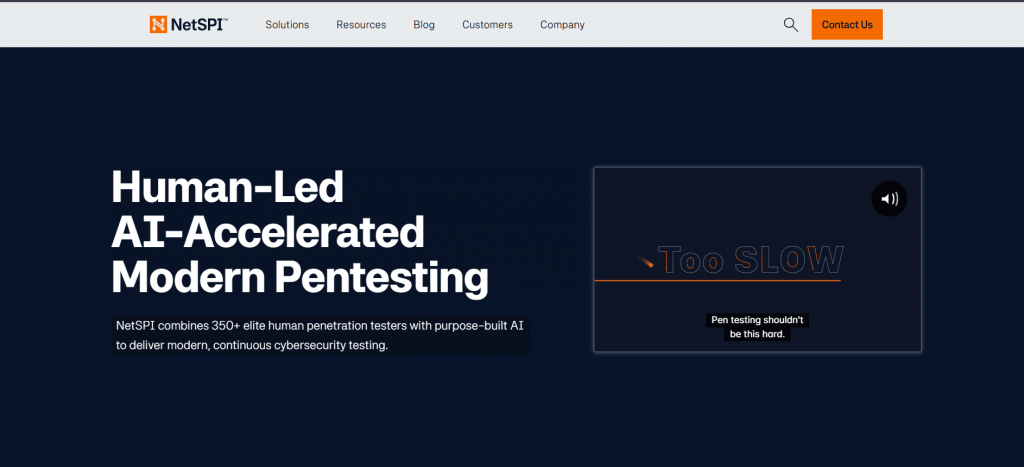
NetSPI describes itself as pioneering the PTaaS model. They have grown to over 350 in-house security professionals who provide over 50 distinct types of penetration tests. It states that it currently works with 90 percent of the top 10 United States banks, alongside a roster of Fortune 500 companies in other heavily regulated sectors.
NetSPI uses its proprietary Resolve platform to give clients real-time access to findings and seamless scheduled retesting. They also bring unique capabilities to the table, handling highly specialized categories like mainframe and hardware testing.
Testing capabilities:
What makes them stand out:
An in-house testing team, platform-based reporting with attack path visualization, and highly specialized testing categories like mainframe and hardware.
Strongest fit:
Regulated industries and large enterprises that need broad testing scope alongside a year-round reporting platform.
Category: Hybrid PTaaS
Headquarters: Redwood City, California, United States
Founded: 2013
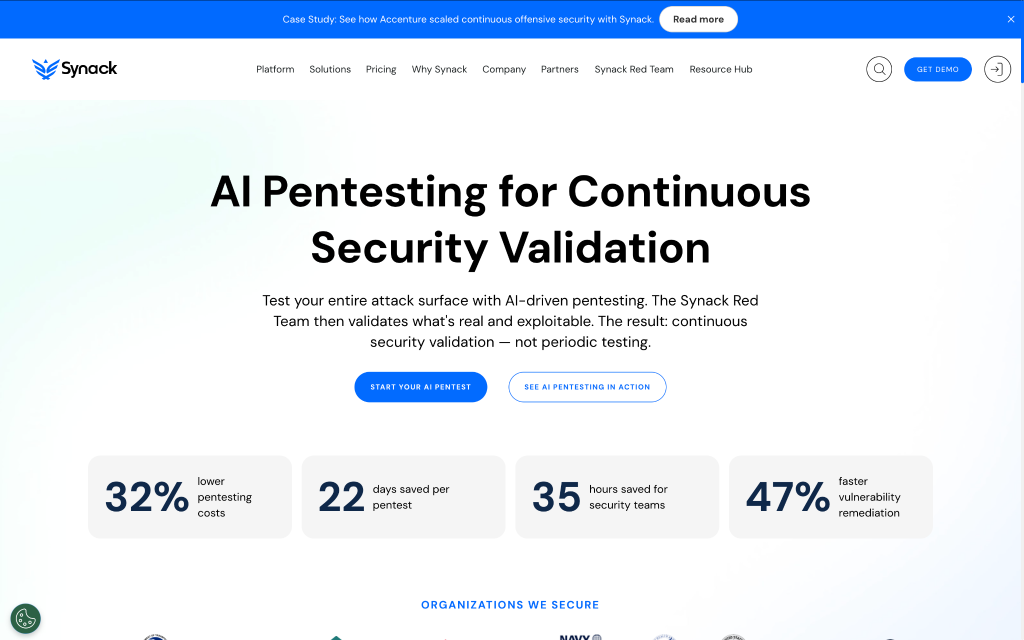
Former National Security Agency operators built the model around the Synack Red Team, a vetted researcher community operating across more than 80 countries. The platform pairs this human network with AI-supported tooling to handle reconnaissance and vulnerability validation at scale.
Synack holds a FedRAMP Moderate authorization, making it a highly attractive option for United States federal and defense clients. The company structures most engagements as annual subscriptions rather than point-in-time tests, and they don’t publish standard pricing publicly.
What makes them stand out:
FedRAMP Moderate authorization, global vetted researcher network, and a workflow that successfully blends human judgment with AI support.
Strongest fit:
Organizations preferring vetted crowdsourced researchers, including federal agencies and regulated enterprises.
Category: Crowdsourced security platform
Headquarters: San Francisco, United States
Founded: 2012
HackerOne launched in 2012 as a coordinated vulnerability disclosure and bug bounty platform. Since then, it has successfully expanded into pentesting using the same hacker community model. The platform has paid out over $230 million in bounties so far.
They regularly work with clients including government agencies and major technology companies. The HackerOne penetration testing offering is an ideal match for organizations that already run, or plan to launch, an ongoing vulnerability disclosure program.
What makes them stand out:
A large global community of security researchers, proven bug bounty infrastructure, and solid program options backed by ISO 27001 and FedRAMP authorizations.
Strongest fit: Mature security teams running bug bounty programs that want penetration testing on the same platform.
Category: Security services provider
Headquarters: Boston, Massachusetts, United States
Founded: 2000
Rapid7 is a publicly traded security services provider. They are highly recognized for the Metasploit penetration testing framework and the Insight platform, which handles vulnerability management, detection, and response.
They provide penetration testing as a single line item within a much larger portfolio of managed and professional security services. It isn’t their sole focus. This setup makes them an easy choice for organizations already utilizing Rapid7 products for vulnerability management or threat detection.
What makes them stand out:
Tight integration with the broader Rapid7 Insight platform, ownership of the industry-standard Metasploit framework, and the ability to combine testing with active detection and response services.
Strongest fit:
Existing Rapid7 customers wanting integrated exposure management alongside penetration testing.
Category: Offensive security consultancy
Headquarters: Fairlawn, Ohio, United States
Founded: 2012
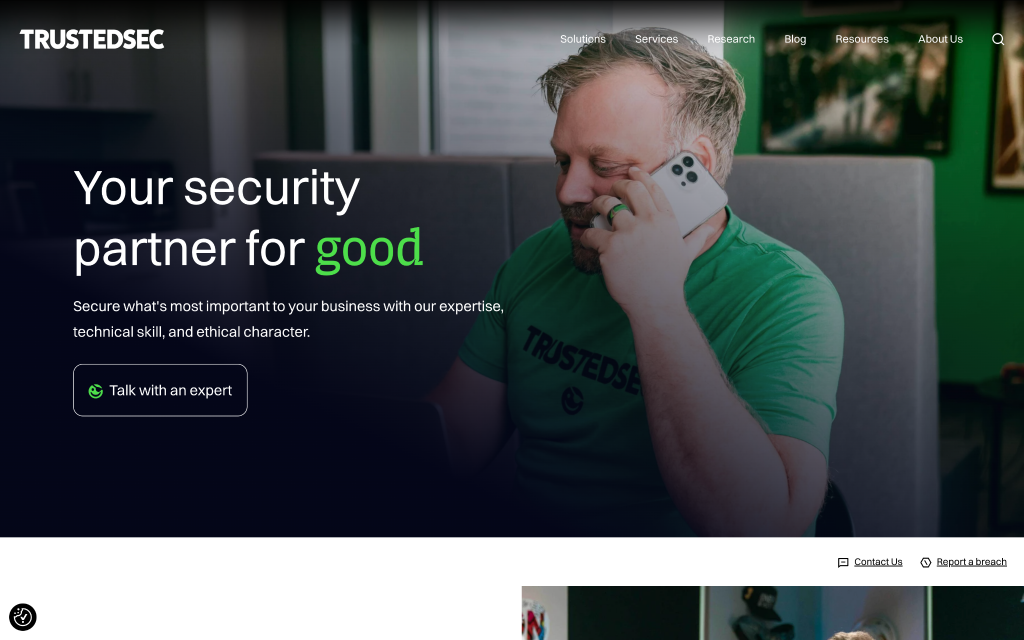
David Kennedy, a former National Security Agency and United States Marine Corps cyber operator, founded TrustedSec in 2012. The firm is frequently selected by organisations for its strictly practitioner-led engagements, prioritising hands-on consulting over platform-first business models.
The consultancy holds a strict CREST certification for its penetration testing practice. They’ve successfully completed over 7,000 engagements for Fortune 500 companies and government entities. TrustedSec consultants also stay active in the community, constantly contributing to open-source security tooling and publishing public research.
Testing capabilities:
What makes them stand out:
CREST-accredited practitioner-led testing, deep red team and social engineering expertise, and deep contributions to open-source security research.
Strongest fit: Companies looking for red teaming and social engineering services delivered by a practitioner-led team.
Category: Traditional penetration testing firm
Headquarters: Mississauga, Ontario, Canada
Founded: 2011
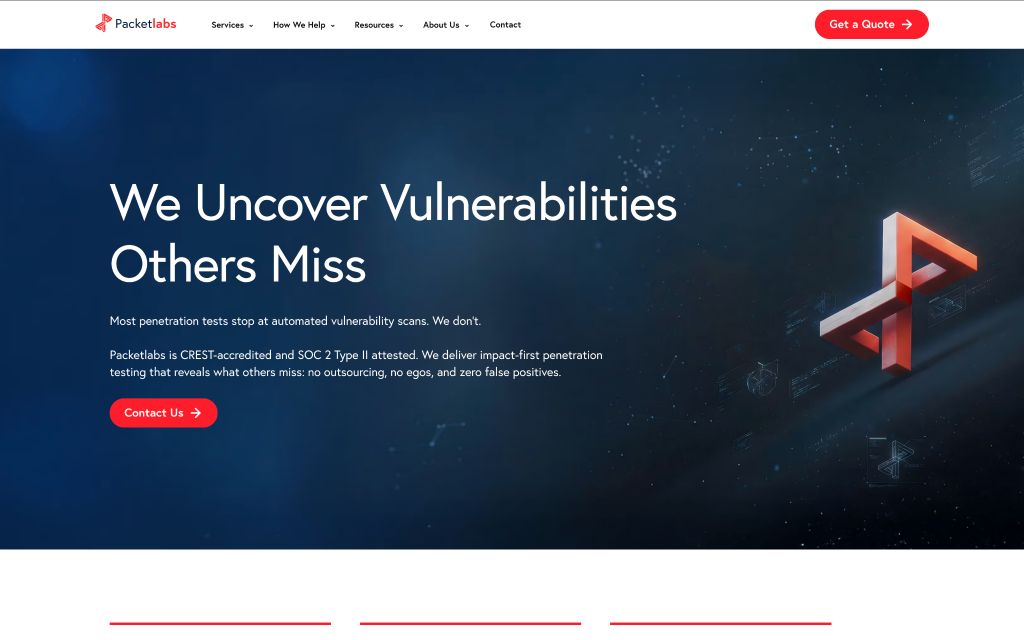
Packetlabs anchors its business entirely on a manual-first testing methodology. They openly state that 95 percent of their engagement work relies on human effort rather than automated scanning. The firm holds CREST accreditation and SOC 2 Type II attestation, while requiring every staff tester to carry at least an OSCP certification.
They notably refuse to sell security products or platforms. They use this strict vendor-neutral stance to guarantee unbiased findings. Their methodologies heavily reference industry gold standards like the MITRE ATT&CK framework, NIST SP800-115, and the SANS Pentest Methodology.
What makes them stand out:
A manual-first approach, with 95% of testing done by hand. A strictly vendor-neutral approach that focuses exclusively on testing rather than software sales, supported by CREST and SOC 2 Type II accreditations.
Strongest fit:
Organizations in Canada and North America seeking CREST-accredited, manual-first testing with clean compliance alignment.
Category: Compliance-focused security consultancy
Headquarters: Nashville, Tennessee, United States
Founded: 2018
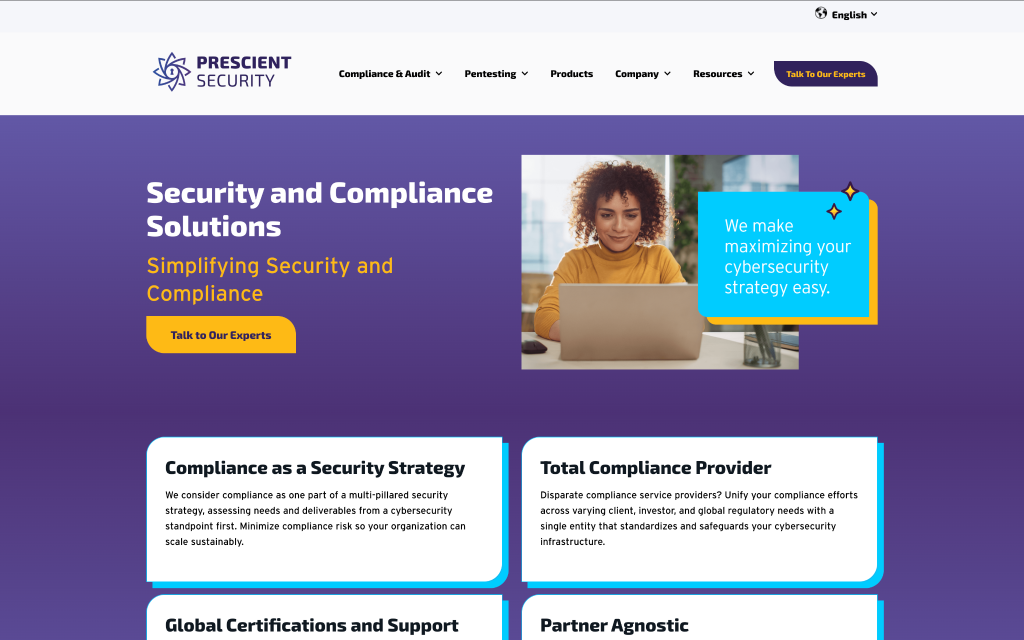
Prescient Security started in 2018 as a pure penetration testing practice before branching out into compliance auditing and attestation services. They emphasize that real security practitioners built the company from the ground up, contrasting themselves with traditional accounting firms that simply bolted cybersecurity services onto their practice later.
The firm supports well over 25 distinct compliance frameworks, including HITRUST, SOC 2, ISO 27001, and FedRAMP. Their fully distributed team spans the United States, Europe, and Asia-Pacific. This global footprint lets clients coordinate overlapping penetration testing and attestation timelines with one single vendor.
What makes them stand out:
A tightly integrated compliance audit and penetration testing practice and framework coverage across SOC, ISO, and FedRAMP.
Strongest fit:
Organizations preparing for SOC 2, ISO 27001, or similar compliance audits that want testing and attestation support from one provider.
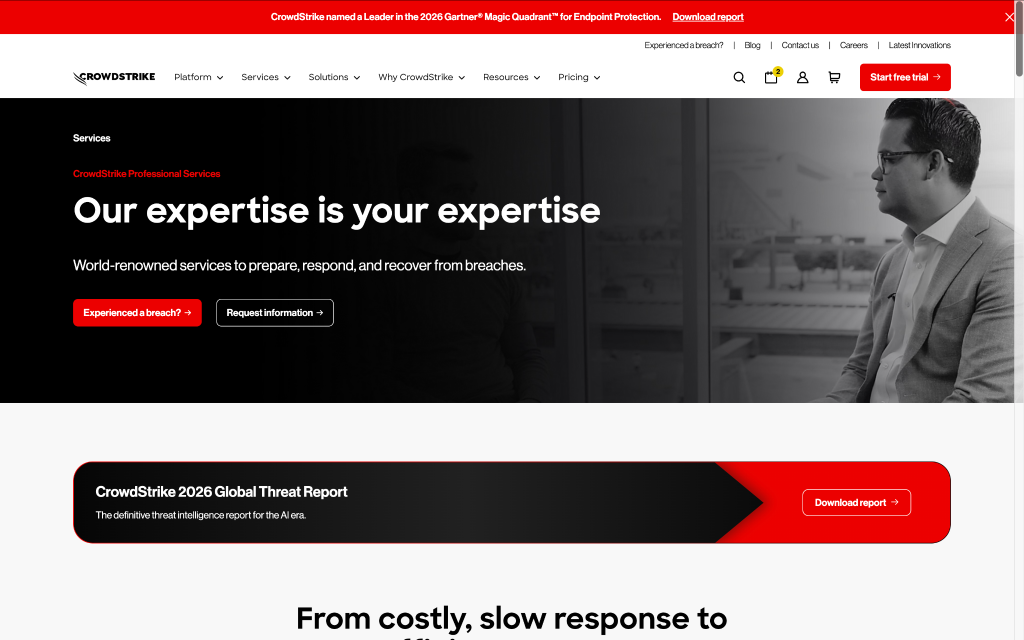
CrowdStrike Services delivers adversary emulation and red team testing built on live threat intelligence from its global incident response operations. Its capabilities include AI red teaming for LLM-based business tools, making it a strong option for enterprise teams already running the Falcon agent.
The right penetration testing partner depends entirely on your stack, deployment cadence, and regulatory obligations. A company rushing to clear a SOC 2 audit requires a completely different approach than an enterprise running routine red team exercises. Scrutinize testing methodologies, certifications, and reporting depth over generic market titles.
Here is a quick recap on which vendors are well suited for specific scenarios:
Match your needs directly to vendor strengths: choose Kualitatem or Prescient Security for compliance bundling. Cobalt or NetSPI for scalable PTaaS. Bishop Fox or TrustedSec for specialised, manual offensive consulting. Synack or HackerOne for crowdsourced researcher pools; and Packetlabs for a manual-first focus.
Before signing a contract, lock down your exact scope and remediation expectations. Clear parameters make comparing vendor methodologies and actual technical quality simple.
If you want a testing partner that bundles penetration testing with broader QA and compliance-focused assessments under one roof.
Not sure which model fits your stack? Book a free call with Kualitatem and we’ll help you find the right testing approach.

Nabeesha is a Digital Content Executive at Kualitatem Inc. With a background in communication and extensive knowledge of QA and cybersecurity, she brings a business-first lens to technical content. Her work helps CTOs and engineering leaders cut through the noise and make confident decisions about software quality.
Not sure where your QA stands?
Speak to an Expert

Our experts are all ready. Explain your business needs, and we’ll provide you with the best solutions. With them, you’ll have a success story of your own.
Contact us now and let us know how we can assist.