
Simple 7 Reasons to Use Agile Testing for Fintech
March 19, 2026



Why Fintech Teams Are Moving to Agile Testing (And Why We Think You Should Too)
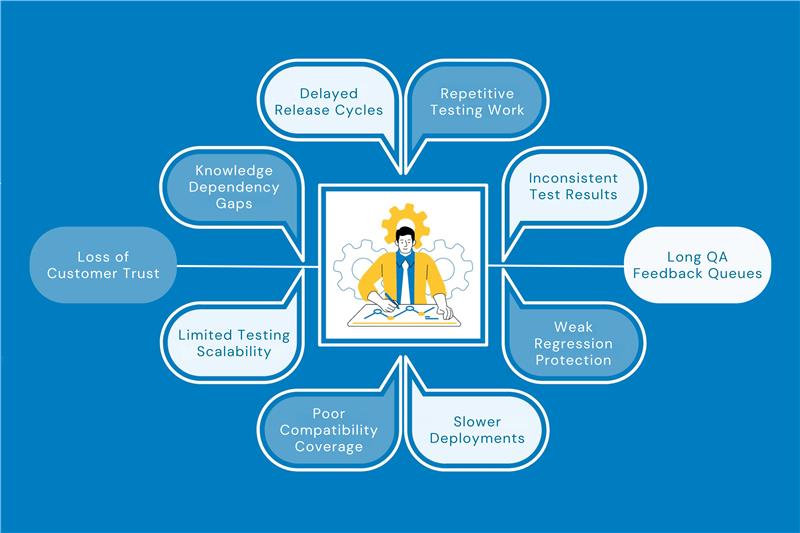
We have spent years improving software quality at Kualitatem Inc in some of the most demanding industries worldwide. Fintech is among the hardest. Banking apps, trading platforms, and payment systems, these products can’t afford to break. And yet, the pace at which they need to ship keeps getting faster, which mostly are:
That’s exactly why agile testing has become the go-to approach for serious fintech teams. Let me walk you through what we’ve seen on the ground in plain language.
Here’s what a traditional testing cycle looks like in most fintech companies: developers build something, QA gets it weeks later, bugs are found close to launch, and suddenly everyone is scrambling. Sound familiar?
The numbers back this up. A 2023 Capgemini report found that 75% of financial services firms say “keeping up with rapid change” is their biggest QA headache. And according to IBM research, a bug found late in the process costs 5 to 10 times more to fix than one caught early.
In trading or banking software, a bug in production doesn’t just cost money. It damages your reputation, puts you at risk with regulators, and can shake customer trust that took years to build.
The solution isn’t hiring more testers. It’s testing smarter.
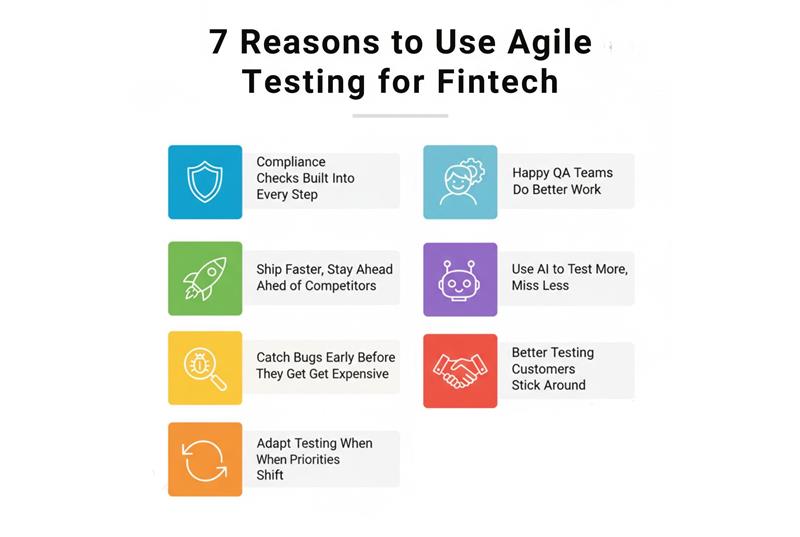
Financial regulations change constantly. PCI-DSS, GDPR, MiFID II, and SOC 2 aren’t just checkboxes. They’re moving targets.
With agile testing, compliance checks are built into every sprint. You’re not cramming for an audit at the last minute. You’re already covered.
Deloitte’s 2024 report found that compliance failures cost financial firms an average of $14.8 million per incident. Teams using agile testing cut audit delays by up to 40%.
We build compliance checkpoints directly into every sprint cycle for our clients. It becomes second nature.
Speed matters enormously in fintech. If a competitor launches before you, you may lose that market window entirely.
Agile testing moves quality checks to the beginning and middle of the process not just the end. This is called “shifting left,” and it’s a game-changer.
The 2023 State of DevOps Report found that high-performing agile teams deploy code 208 times more often than slower teams, with a 2,604x faster lead time from code write to production.
That’s not a small difference. That’s a completely different way of operating.
This one always gets people’s attention. Finding a bug after it’s already live in production costs 6 times more to fix than catching it during testing. Catching it even earlier during planning can cost 100 times less (NIST, 2023).
For a fintech team running 10 sprints per quarter, catching bugs earlier can save between $200,000 and $600,000 per year. That’s real money.
Our QA engineers embed directly into your development cycles so nothing slips through.
In fintech, things change overnight. A new regulation drops. A competitor launches something. An API integration gets bumped up. Suddenly, your entire sprint plan looks different.
Agile testing is built for this. Test plans are modular. Regression suites are automated and reusable. Your QA team adjusts alongside the product team.
McKinsey research shows agile financial services teams are 1.5x more likely to launch new products successfully and 2x more likely to execute strategic pivots.
In traditional setups, QA is the last stop before launch. Testers work under pressure, with little ownership, and often feel like they’re just catching other people’s mistakes.
Agile testing changes that completely. QA becomes part of the process from day one. Testers have context, ownership, and time to do the job properly.
A Gallup study found that engaged software teams show 21% higher productivity and 37% lower absenteeism. In fintech, where good QA talent is hard to find, keeping your team happy is a real competitive edge.
We structure all our engagements so QA engineers are embedded not afterthoughts. It shows in the results.
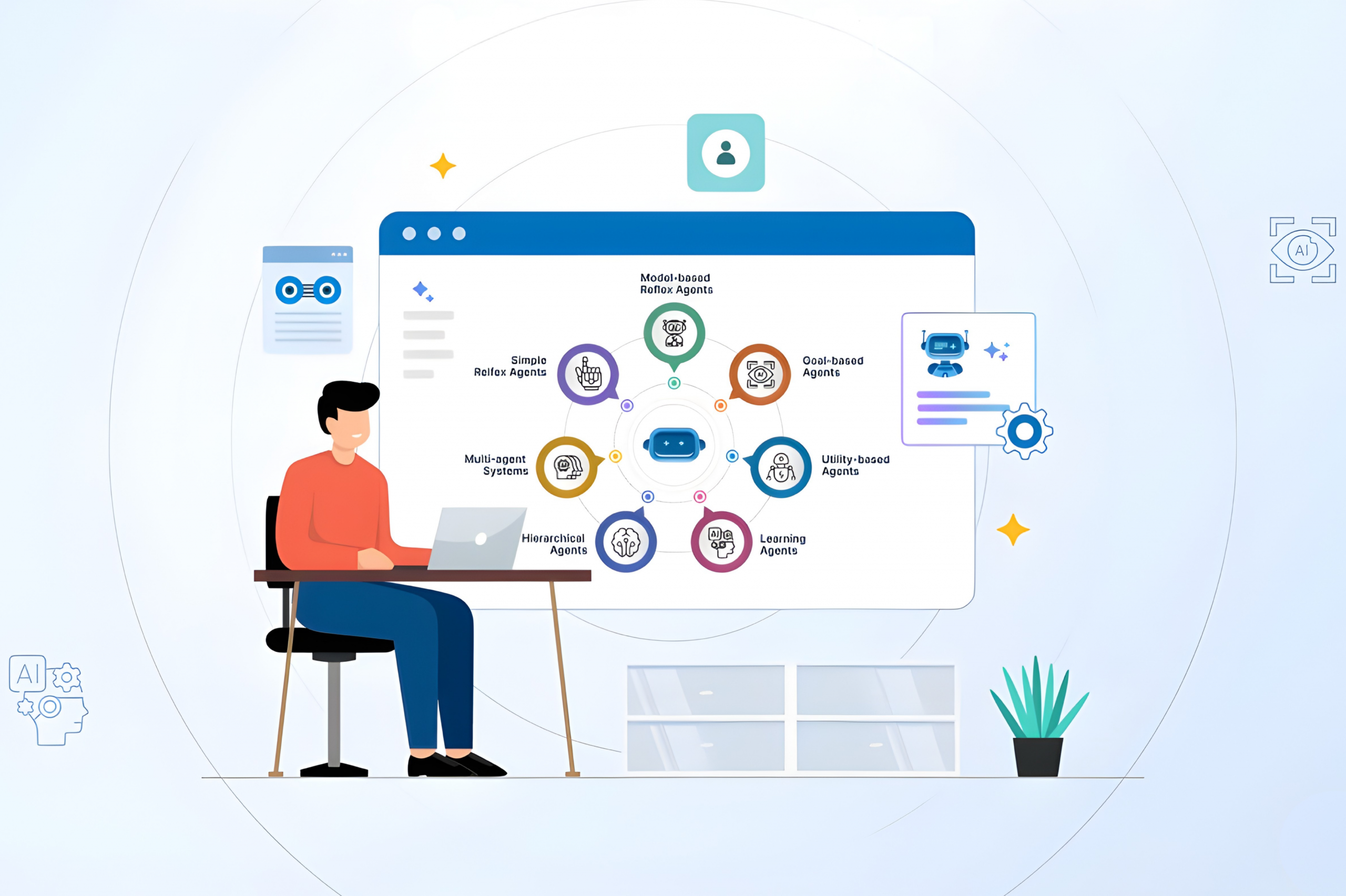
Agile testing is the foundation. Layer AI on top of it, and you unlock a whole new level of speed and coverage.
AI-powered testing tools can automatically generate test cases, decide which regression tests to run (and skip the ones that don’t matter), and catch unusual patterns in financial transaction flows that even experienced testers would miss.
Gartner projects that by 2027, 80% of organizations will use AI-assisted testing tools up from less than 20% in 2023. Early fintech adopters are already seeing 35–50% less manual testing effort and 60% faster regression cycles.
For teams dealing with high-frequency transactions, fraud detection, or real-time risk scoring, AI testing services aren’t a luxury. It’s a necessity. Reach out to Kualitatem’s team to consult for your business for no additional charges.
Every sprint in agile testing is tied to real user stories and real acceptance criteria. You’re not building against assumptions from six months ago you’re testing against what customers actually need today.
Forrester Research (2023) found that companies using agile quality practices report 30% higher customer satisfaction scores and 25% fewer post-release support tickets.
For a mobile banking app or a trading dashboard, that directly translates to retention and revenue.
A Trading Platform Before a Compliance Audit
One mid-size trading company came to us with six weeks until a PCI-DSS audit. Their entire testing process was manual and tracked in spreadsheets. We helped them switch to agile testing with continuous integration. They completed three full regression cycles in four weeks and passed the audit with zero critical findings.
A Banking SaaS Company Going Global
A banking software provider was launching into three new markets simultaneously and needed to test localization, currency handling, and different regulatory requirements all at once. Using agile testing sprints with automated test suites, we helped them cut their QA cycle from 8 weeks down to 11 days, and they launched in all three markets at the same time.
| What We’re Measuring | What Agile Testing Delivers |
| Cost to fix bugs | Up to 100x lower when caught before production |
| Release frequency | Up to 208x more often |
| Audit preparation delays | 40% fewer |
| Manual testing effort (with AI) | 35–50% reduction |
| Customer satisfaction | Up to 30% increase |
| Team productivity | 21% higher |
Is agile testing safe for heavily regulated fintech?
Absolutely. We build compliance gates, audit trails, and documentation into every single sprint. It’s actually more audit-friendly than traditional testing because nothing is left to the last minute.
How is this different from what we do now?
Traditional QA tests at the end. Agile testing puts quality into every step of development. Bugs are cheaper to fix, releases are faster, and nothing piles up at the end.
How quickly will we see results?
Most teams see measurable improvements in defect rates and release speed within 2–3 sprints. Full ROI, including cost savings and faster delivery, usually shows up within one quarter.
Can a small team make this switch without disrupting everything?
Yes. We always recommend starting with one product line or one team. You don’t have to flip everything at once. We specialize in phased transitions that keep operations stable while the change happens.
What kinds of testing are included?
Functional, regression, performance, security, API, and compliance testing are all embedded into your sprint cycles and automated wherever it makes sense.
Fintech is moving too fast for slow testing. If your QA process is still living at the end of the development pipeline, you’re already behind.
Agile testing services fixes that. And when you pair it with AI-powered tools, you’re not just catching up, you’re building a quality system that gets smarter over time.
We’ve seen it work across trading platforms, banking software, and financial SaaS products. The methodology is proven. The results are measurable. And the shift is less painful than most teams expect.
If you want to talk about where your team is today and what a realistic transition looks like, we’re happy to walk you through it.

Our experts are all ready. Explain your business needs, and we’ll provide you with the best solutions. With them, you’ll have a success story of your own.
Contact us now and let us know how we can assist.