Software testing does not rely on one method anymore. Three approaches work together on most modern releases: white box testing, black box testing, and gray box testing.
White box testing looks inside the code.
Black box testing checks the app from the outside, the way a real user would.
Gray box testing sits in between… partial knowledge, focused testing.
This article breaks down all three: how each one works, when to use it, and how real teams combine them on a single release.
Why White Box, Black Box, and Gray Box Testing Matter
One testing method gives one view of the software. Use only one, and the blind spots add up.
Here is what each method actually shows a team:
White box testing shows what happens inside the code.
Black box testing shows what the user experiences.
Gray box testing connects the two, using partial architecture knowledge to focus functional tests where they matter most.
Different stages of the SDLC need different kinds of proof:
A development team needs proof that a function’s logic handles every path correctly. That’s white box testing’s job.
A product team needs proof that a feature works the way the requirements describe it. That’s black box testing’s job.
A security team needs to test an API or a login flow with only partial documentation. That’s exactly how gray box testing works.
Bottom line: combining all three catches more defect types, closes more security holes, and gives a far more complete picture of the product before release.
White Box vs Black Box vs Gray Box Testing: Quick Comparison
Each method answers a different question about the same software. Here’s the side-by-side view before we go deep on each one.
Aspect
White Box Testing
Gray Box Testing
Black Box Testing
Internal code visibility
Full access to source code and architecture
Partial access: code, architecture diagrams, or API docs
No access to source code
Primary objective
Verify internal logic, structure, and code paths
Verify functional behavior with some structural insight
Verify functional behavior against requirements
Testing level
Unit testing, component testing
Integration testing, security testing
System testing, acceptance testing
Typical testers
Developers, white box test engineers
QA engineers with technical background, security testers
Reflects the real user experience, no coding needed
Limitations
Needs programming skill, misses UX issues
Partial knowledge can leave some defects uncovered
Internal logic errors and edge cases stay hidden
Common use cases
Unit testing, code review, static analysis
API testing, integration testing, penetration testing
Functional testing, regression testing, UAT
Automation suitability
High, plugs straight into CI/CD
Moderate to high, depends on documentation
High, especially for UI and API scripts
White Box Testing
White box testing is also called structural testing or glass box testing. The tester has full access to the source code, architecture, and design documents, and builds test cases around specific paths and logic branches.
Common Techniques
Statement coverage – every line of code runs at least once
Branch coverage – every decision point takes both its true and false paths
Path coverage – every possible route through a function gets tested
Condition coverage – each individual condition inside a compound decision gets tested
Mutation testing – small code changes get introduced, then checked against the existing test suite
Example: a discount function has three conditions: loyalty status, cart total, and promo code. Branch coverage makes sure every combination of true and false across those three conditions actually runs, not just the “happy path” where all three are true.
SonarQube / Coverity – static code analysis, flags quality and security issues before a build ships
These tools plug into most CI/CD pipelines, which is what lets white box testing run automatically on every commit.
Advantages
Finds logic errors, dead code, and security flaws at the source
Gives a precise, measurable coverage number
Catches defects when they’re cheapest to fix
Research by Boehm and Basili, published in IEEE Computer, found that a defect fixed after release can cost 15 to 100 times more than the same defect fixed during development. That gap is the whole argument for testing early.
Limitations
Requires programming knowledge, so testers need coding skill and time to read the codebase
Says nothing about whether the software matches what the user actually needs. A function can be logically perfect and still miss the business requirement entirely
Best Use Cases
Applications built on complex algorithms
Systems where failure has serious consequences, like medical devices or financial trading platforms
Any codebase where the team wants to raise code quality before it reaches later testing stages
Skills Required
Reading and writing code in the application’s programming language
Understanding data structures and algorithms
Comfort with debugging and static analysis tools
Familiarity with the team’s CI/CD pipeline
Automation Opportunities
Unit tests and static analysis checks are the easiest tests to automate, and they belong in the CI/CD pipeline so they run on every commit. Kualitatem’s Automation Testing Services build these pipelines directly into a client’s existing development workflow.
Black Box Testing
Black box testing is also called functional testing or behavioral testing. The tester has zero knowledge of the source code, architecture, or internal design, and tests the application the way an end user would, based only on requirements and documented specs.
Functional Testing Techniques
Equivalence partitioning – group inputs into sets the app should treat the same way, then test one value per set instead of every possible value
Boundary value analysis – test the edges of an input range, since defects cluster at the minimum, maximum, and just-outside-the-range values
Decision table testing – map combinations of conditions to expected outcomes, ideal for business rules with several inputs
State transition testing – check how the app moves between states, like an order moving from “placed” to “shipped” to “delivered”
Example: for an age field that accepts 18 to 65, boundary value analysis tests 17, 18, 65, and 66, not every number in between. That’s four tests instead of forty-eight, and it still catches the bugs that actually happen at the edges.
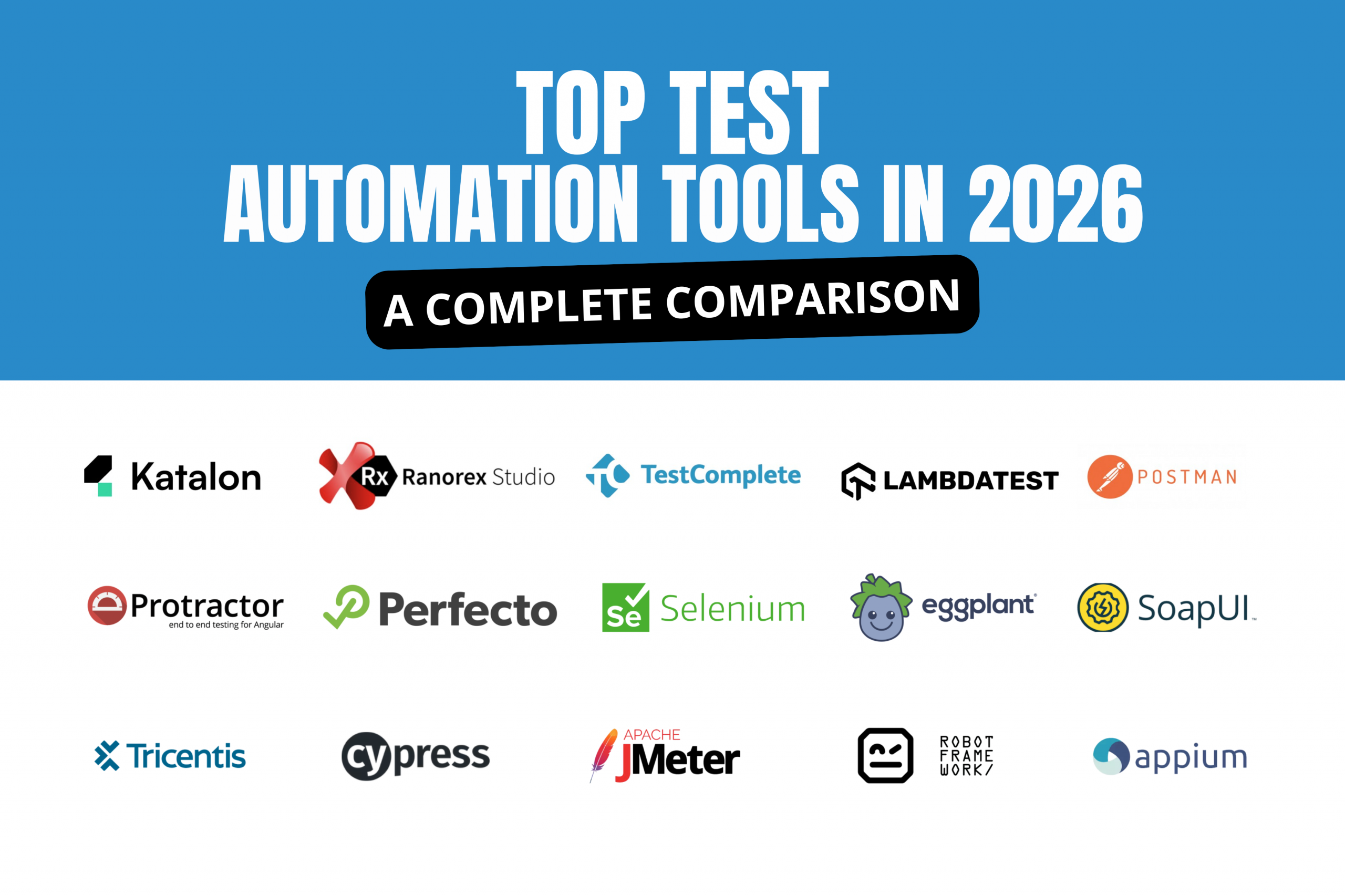
Katalon Studio, TestComplete – combine several of the above in one platform
Kualitatem’s Functional Testing Services and Automation Testing Services apply these tools inside a client’s release cycle.
Advantages and Limitations
Advantages:
Validates the software the way a real user experiences it
Needs no source code access, the only option when the code is proprietary or third-party
Fits regression suites and user acceptance criteria well
Limitations:
Cannot see inside the code, so a test can pass even when a hidden logic error exists in a path the test never touches
Gray Box Testing
Gray box testing blends the two approaches above. The tester has partial knowledge of the application’s internal structure, maybe a database schema, an API contract, or a network diagram, and uses that knowledge to design sharper, more targeted functional tests.
When Gray Box Testing Is Used
Gray box testing fits situations where full source code access isn’t on the table, but some architectural detail is.
Integration testing between two systems: the tester usually has the API specification, not the full codebase on both sides
Security testing: the Open Web Application Security Project (OWASP) categorizes penetration tests as black box, gray box, or white box, based on how much access the tester has to source code and architecture documentation. Gray box engagements are common because they mirror how an attacker with some inside knowledge, say, a former employee or a compromised vendor account, would actually operate
Advantages
Better test coverage than pure black box testing, since partial architectural knowledge helps target specific data paths and integration points
Skips the time cost of a full white box code review, which fits tight testing windows
Kualitatem’s Security Testing Services and Penetration Testing Services lean on this exact balance for engagements where full source access isn’t available.
Limitations
Partial knowledge means some internal defects stay hidden. A tester working from an API contract won’t catch an error in a code path that contract doesn’t describe
Needs a tester with enough technical background to read architecture documents and build useful test cases from them
Common Techniques
Matrix testing – maps test cases against known architectural components to check coverage across the whole system
Orthogonal array testing – reduces a large set of input combinations to a smaller, statistically representative set
Pattern testing – checks the application against known failure patterns from similar systems
Practical Use Cases
API testing, since the tester usually works from documentation rather than the underlying code
Integration testing between microservices
Penetration testing where the security team has partial architecture diagrams
When to Choose Each Approach
Choose white box testing when the team owns the source code, the logic is complex enough that structural coverage matters, and a hidden defect would be costly.
Choose gray box testing when a tester has partial documentation, like an API contract or architecture diagram, but not full source access. This covers most integration testing and security testing.
Choose black box testing when the goal is to confirm the software meets its requirements from a user’s point of view, or when the source code is proprietary, third-party, or otherwise off-limits.
Combine all three on any release where code quality, functional correctness, and security all matter at once. That’s most production applications today!
Integrating White, Gray, and Black Box Testing Across the SDLC
Each method has a natural home in the software development lifecycle:
Unit testing → White box. Developers write and run these tests against individual functions and methods while the code is still open in front of them.
Integration testing → Gray box. A tester checking how two services talk to each other typically works from an API contract or a data flow diagram, not the full source of both systems.
System testing → Black box. The QA team runs the complete application against its requirements, the same way an end user would use it.
Security testing → All three, mostly gray box. A gray box penetration test, informed by architecture documentation, finds issues a pure black box test would miss, and takes less time than a full white box source review.
Regression testing → White box + black box. Automated white box unit tests catch logic regressions on every commit, while black box functional regression suites confirm the user-facing behavior still holds up. Kualitatem’s Regression Testing Services build both layers into one release process.
User acceptance testing → Black box. Business stakeholders and end users test the application against real-world scenarios, with no need to see the code behind it.
Real-World Example: Testing an E-Commerce Checkout Release
Picture an e-commerce platform rolling out an update to its checkout flow. Here’s how all three methods show up on the same release:
White box: the dev team runs unit tests against the tax calculation and discount logic, checking every branch that handles a coupon code, a shipping rule, or a tax jurisdiction.
Gray box: the QA team tests the payment gateway integration using the gateway’s API documentation, designing tests around authorization, decline handling, and timeout scenarios, without ever touching the gateway provider’s own source code.
Black box: before launch, QA simulates a real customer’s path… browse a product, add it to cart, enter shipping details, complete payment, get an order confirmation.
Gray box (security): in parallel, the security team runs a gray box penetration test against the checkout API, working from the same documentation QA used, checking for issues like price manipulation or session handling flaws.
Four different methods, four different bugs caught:
The white box tests catch a miscalculated discount before it reaches a customer.
The gray box tests catch a timeout that only shows up under specific payment gateway conditions.
The black box tests confirm the customer journey works end to end.
The security test catches a flaw that only an attacker with partial system knowledge would find.
No single method on this list would have caught all three problems on its own.
Frequently Asked Questions
What is White Box Testing? White box testing checks an application’s internal code, logic, and structure. The tester has full access to the source code and builds test cases around specific statements, branches, and paths.
What is Black Box Testing? Black box testing checks an application’s behavior from the outside, based on requirements and expected outputs. The tester has no access to the source code and interacts with the software the way an end user does.
What is Gray Box Testing? Gray box testing combines the two. The tester has partial knowledge of the application’s internal structure, like an API contract or architecture diagram, and uses it to design more focused functional tests.
What is the difference between White Box and Black Box Testing? White box testing works from full source code access and targets internal logic. Black box testing works from requirements alone and targets user-facing behavior. See the comparison table earlier in this article for the full breakdown.
When should Gray Box Testing be used? Gray box testing fits integration testing and most security testing, where a tester has partial documentation, like an API specification, but not full source code access on every side of the system.
Which testing methodology is best? No single method covers every risk alone. White box testing covers code-level logic, black box testing covers user-facing behavior, and gray box testing covers the middle ground, especially in integration and security work.
Can these testing methods be combined? Yes, and most production releases do exactly that, mapped to different stages of the SDLC (see the integration section above). Kualitatem’s Software Testing Services build this combined approach into a client’s release process from planning through launch.
Conclusion
White box, gray box, and black box testing each answer a different question about the same application:
White box testing proves the code works the way it was written to work.
Black box testing proves the application works the way the user needs it to work.
Gray box testing bridges the two wherever full source access isn’t available.
A release built on one method alone leaves gaps. A release built on all three doesn’t. Match the method to the SDLC stage, the access a tester actually has, and the risk a defect at that stage would carry. The result: software checked from the inside, the outside, and everywhere in between.
Our experts are all ready. Explain your business needs, and we’ll provide you with the best solutions. With them, you’ll have a success story of your own.
Contact us now and let us know how we can assist.
Subscribe to Us
Subscribe to our newsletter and get our latest posts instantly!